
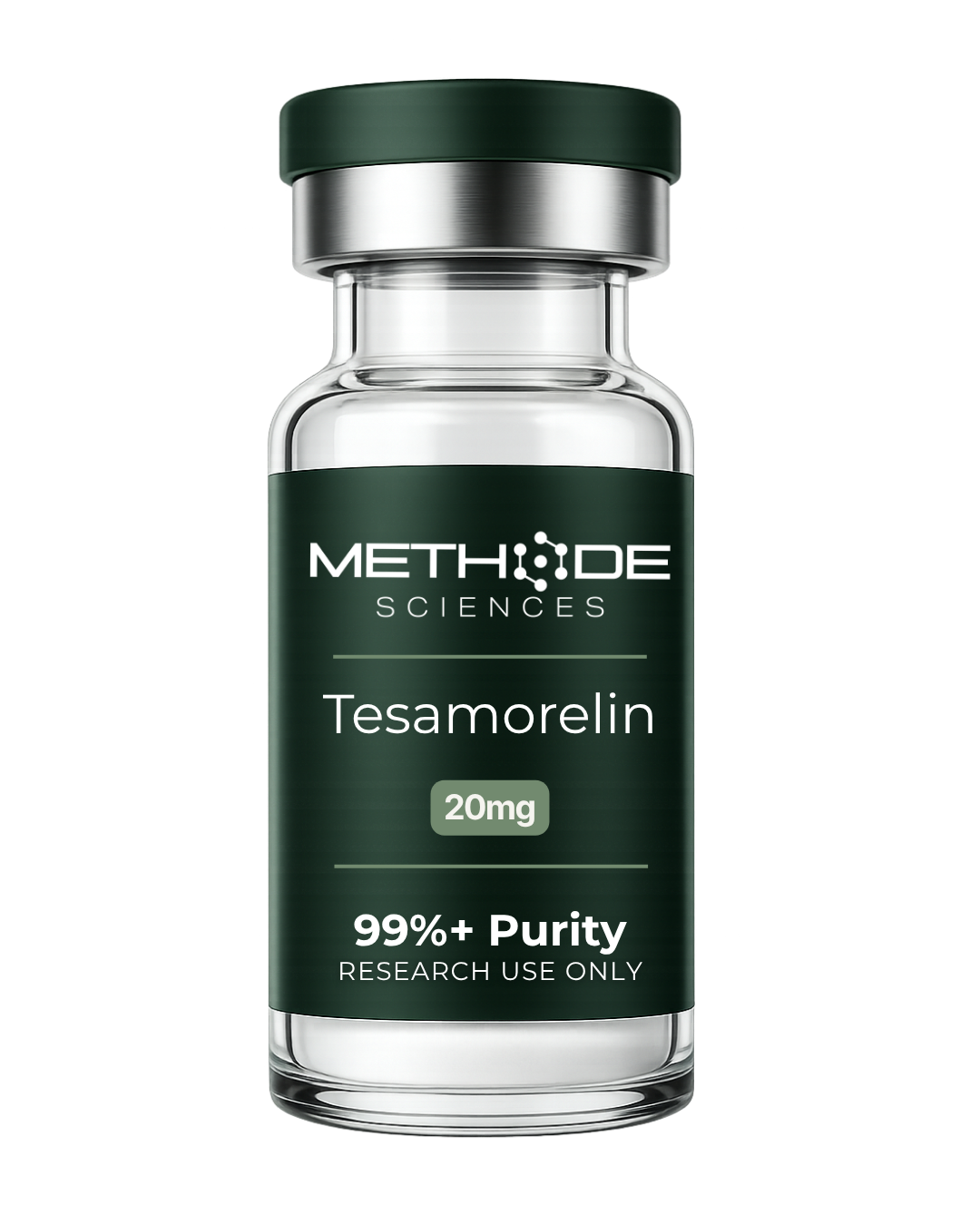
Description
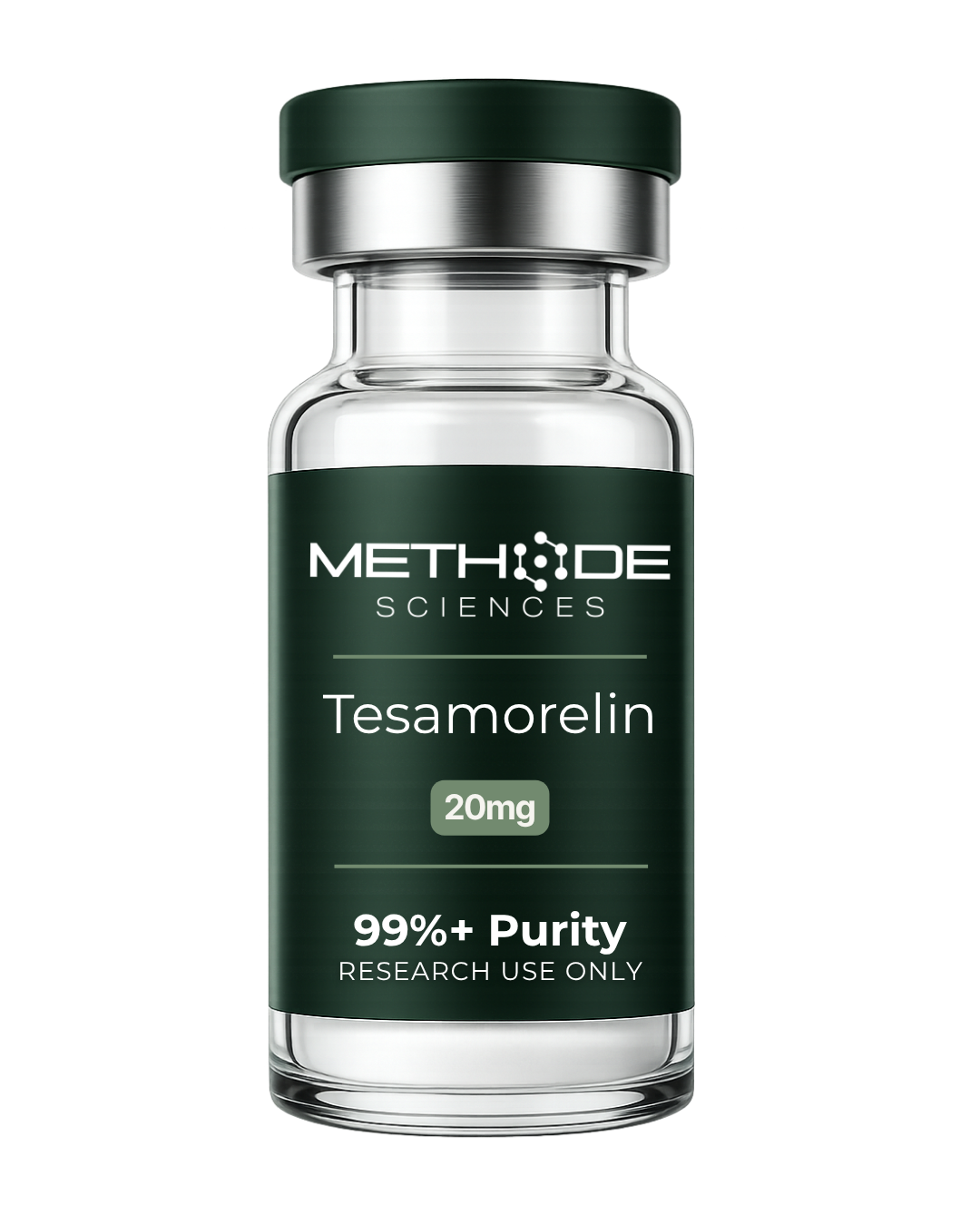
Tesamorelin
Synthetic 44-amino-acid analog of human growth-hormone-releasing hormone (GHRH) with an N-terminal trans-3-hexenoyl modification that protects it from enzymatic cleavage. Studied in GH-axis physiology, IGF-1 signaling, and visceral adipose tissue models. 99%+ purity confirmed by independent HPLC-MS; lot COA published before sale.
- Janoshik Analytical tested
- COA published before shipping
- 2–3 day US delivery, free over $199
- In stock — ships within 24 hours
✔ Third-party lab tested
Certificate of Analysis
Independent laboratory testing confirms purity and composition of this research material.
What tesamorelin is
Tesamorelin is the full-length GHRH(1–44) sequence with a trans-3-hexenoic acid group attached to the N-terminal tyrosine. Native GHRH is cleaved within minutes by dipeptidyl peptidase-4; the hexenoyl cap blocks that cleavage and extends the peptide’s active half-life while preserving full activity at the GHRH receptor. Unlike direct growth-hormone administration, a GHRH analog acts upstream on the pituitary and therefore preserves the pulsatile pattern of GH release and the normal negative feedback through IGF-1 and somatostatin — a distinction that makes it a valuable tool for studying the GH axis under physiological control.
Specifications
| Sizes | 10 mg, 20 mg lyophilized powder, 3 mL clear glass vial |
|---|---|
| Purity | ≥ 99% by HPLC; identity confirmed by LC-MS |
| Identity | (trans-3-hexenoyl)-GHRH(1–44)-NH₂ |
| Sequence | (trans-3-hexenoyl)-YADAIFTNSYRKVLGQLSARKLLQDIMSRQQGESNQERGARARL-NH₂ |
| Molecular formula | C₂₂₁H₃₆₆N₇₂O₆₇S |
| Molecular weight | 5,135.9 Da |
| CAS | 218949-48-5 |
| PubChem CID | 16137828 |
| Appearance | White to off-white lyophilized powder |
| Solubility | Water |
| Storage | −20 °C long term; 2–8 °C short term |
| Testing | Lot-specific COA from Janoshik Analytical |
Research areas
GH-axis physiology
Tesamorelin is used to study GHRH-receptor signaling, somatotroph responsiveness, and the maintenance of pulsatile GH secretion under feedback control.
Visceral adipose tissue
The peptide’s best-documented effect in clinical literature is a selective reduction in visceral (as opposed to subcutaneous) fat, which has made it a reference compound in adipose-depot biology.
IGF-1 and hepatic lipid metabolism
Downstream IGF-1 signaling and reductions in liver fat have been reported in clinical studies, supporting work in hepatic-steatosis models.
Cognitive and neuroendocrine research
Studies in older adults have examined GHRH-analog effects on executive function and memory, linking the GH axis to CNS outcomes.
Mechanism
Tesamorelin binds the GHRH receptor on pituitary somatotrophs, raising intracellular cAMP and stimulating synthesis and pulsatile release of growth hormone. GH in turn drives hepatic IGF-1 production and lipolysis in adipose tissue. Because the pituitary remains subject to somatostatin and IGF-1 feedback, GH levels rise within a physiological range rather than continuously — the key difference between a GHRH analog and exogenous GH.
Published background
Tesamorelin was developed by Theratechnologies and is FDA-approved (as Egrifta) for reduction of excess abdominal fat in HIV-associated lipodystrophy — one of the few peptides in this catalog with an approved clinical indication. Pivotal Phase 3 data are in Falutz et al. (2007, New England Journal of Medicine; 2010, Journal of Clinical Endocrinology & Metabolism). Hepatic-fat findings are reported in Stanley et al. (2019, Lancet HIV), and cognitive work in Baker et al. (2012, Archives of Neurology). These are cited as background on the compound’s pharmacology, not as descriptions of any use of the research material sold here.
Product FAQ
All three are GHRH analogs. Sermorelin is the 1–29 fragment; CJC-1295 is a modified 1–29 with additional substitutions and, in its DAC form, an albumin-binding tail. Tesamorelin is the full 1–44 sequence with a single N-terminal modification and is the only one with an FDA-approved indication.
The 20 mg vial supports longer protocols from a single lot at a lower cost per milligram.
Match the lot number on your vial to the COA on the Lab Results page.
Lot documentation
Every lot is analyzed by Janoshik Analytical, an independent accredited laboratory, before listing. Testing covers identity (LC-MS), purity (HPLC), net content, and endotoxin (LAL assay, USP <85>). The COA is published to the Lab Results page before the lot goes on sale.
Storage & stability
Sealed lyophilized vials remain stable up to 24 months at −20 °C. Refrigerate at 2–8 °C on arrival and for short-term holding, protected from light and moisture. Avoid repeated freeze–thaw cycles.
Shipping & policies
Orders paid before 12 PM PST dispatch within 24 hours. Most arrive in 2–3 business days. Free shipping over $199; $14.99 flat below. US and Puerto Rico only. All sales final; damaged or incorrect orders replaced within 7 days with photos.
Support
US-based support 7 days a week at info@methodesciences.com for orders, tracking, COAs, and institutional purchasing. Support covers orders and documentation only — protocol design is the researcher’s responsibility.
Reviews
There are no reviews yet.