
Description
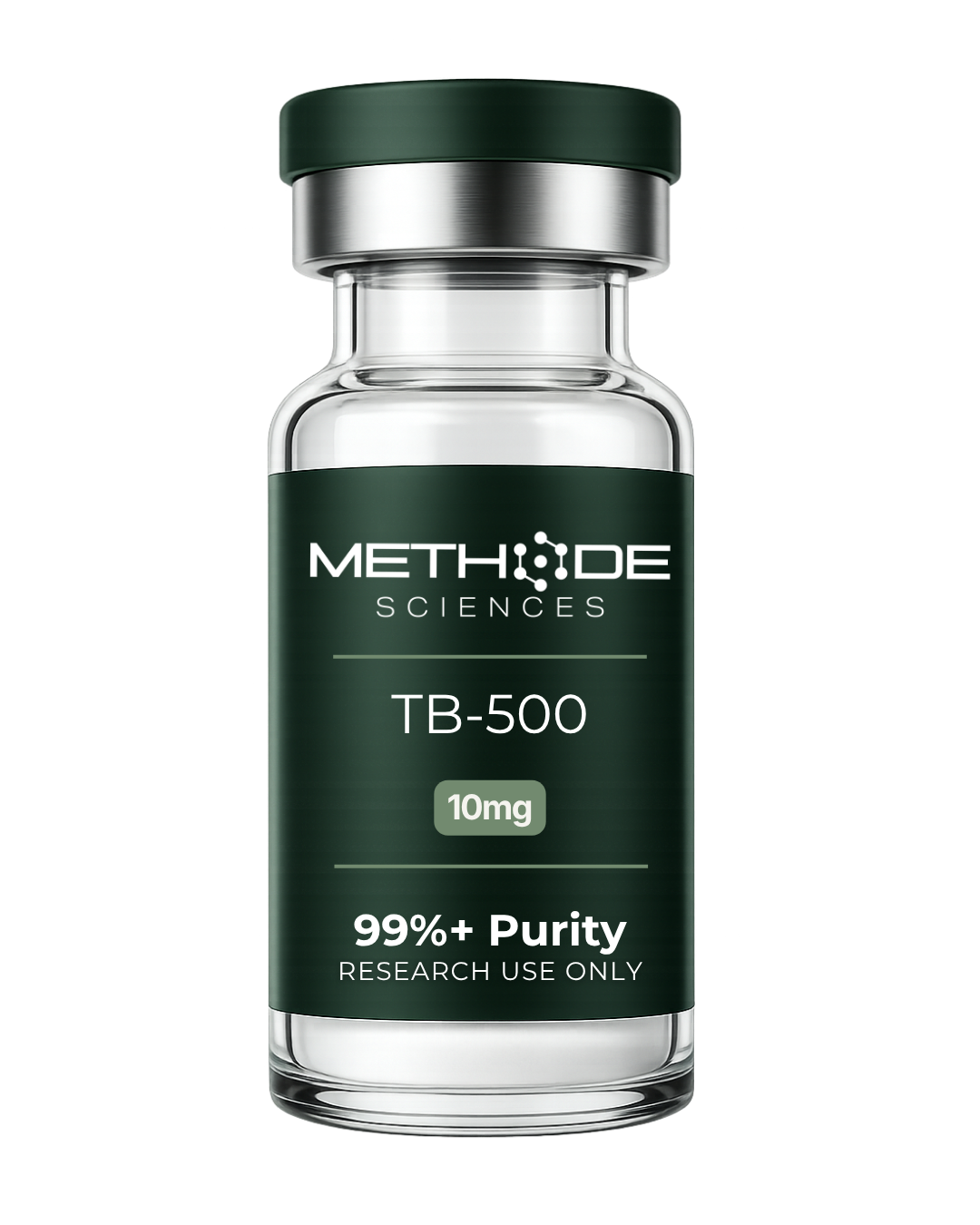
TB-500
Synthetic form of thymosin β4, the principal actin-sequestering protein in mammalian cells, studied in cell-migration, angiogenesis, and low-scar tissue-remodeling models. 99%+ purity confirmed by independent HPLC-MS; lot COA published before sale.
- Janoshik Analytical tested
- COA published before shipping
- 2–3 day US delivery, free over $199
- In stock — ships within 24 hours
Certificate of Analysis
Independent laboratory testing confirms purity and composition of this research material.
What TB-500 is
TB-500 is the research designation for synthetic thymosin β4 (Tβ4), a 43-residue, highly conserved peptide present in nearly every mammalian cell type and at high concentrations in platelets and wound fluid. Its defining biochemical role is binding monomeric G-actin, which places it at the center of cytoskeletal reorganization — the machinery cells use to move, spread, and repair. The seven-residue actin-binding motif (Ac-LKKTETQ, residues 17–23) reproduces much of the parent peptide’s migratory activity and is sometimes supplied on its own; Methode Sciences’ TB-500 is the full-length sequence [CONFIRM with supplier COA].
Specifications
| Size | 10 mg lyophilized powder, 3 mL clear glass vial |
|---|---|
| Purity | ≥ 99% by HPLC; identity confirmed by LC-MS |
| Identity | Thymosin β4 (1–43), N-acetylated |
| Molecular formula | C₂₁₂H₃₅₀N₅₆O₇₈S |
| Molecular weight | 4,963.4 Da |
| CAS | 77591-33-4 |
| Appearance | White lyophilized powder |
| Solubility | Water |
| Storage | −20 °C long term; 2–8 °C short term |
| Testing | Lot-specific COA from Janoshik Analytical |
Research areas
Tβ4 promotes keratinocyte, endothelial, and fibroblast migration into wound beds in vitro and in dermal-wound models, with reduced inflammatory infiltrate.
The peptide stimulates endothelial tube formation and vessel sprouting, in part through up-regulation of VEGF and matrix-metalloproteinase activity.
Following experimental infarction, Tβ4 has been reported to activate epicardial progenitor cells and limit scar formation; parallel work examines skeletal-muscle regeneration.
Tβ4 down-regulates NF-κB activity and reduces collagen deposition in liver and kidney fibrosis models, and has been studied in corneal-injury and dry-eye models in early clinical trials.
Mechanism
Tβ4 sequesters G-actin, maintaining the pool of unpolymerized actin that cells draw on for rapid cytoskeletal rearrangement. Beyond actin, it interacts with integrin-linked kinase (ILK) and Akt signaling, promotes cell survival, and modulates gene expression in inflammatory pathways. Its small size and lack of a conventional receptor make it a distinctive tool for studying migration and remodeling independent of classical growth-factor signaling.
Published background
Thymosin β4 has one of the longest research histories of any peptide in this catalog, with foundational work by Allan Goldstein and colleagues beginning in the 1960s. Mechanistic milestones include Malinda et al. (1999, Journal of Investigative Dermatology) on dermal wound healing, Bock-Marquette et al. (2004, Nature) on cardiac repair, and Smart et al. (2007, Nature) on epicardial progenitor activation. Human trials to date have focused on ophthalmic and dermal-wound applications.
Product FAQ
TB-500 is the common research designation for the synthetic peptide. Some suppliers sell only the 17–23 fragment under the same name; check the sequence on the COA.
The two act through different mechanisms — actin dynamics versus growth-factor and nitric-oxide signaling — so laboratories studying tissue-repair pathways frequently examine them together. See the BPC-157 / TB-500 blend.
Match the lot number on your vial to the COA on the Lab Results page.
Lot documentation
Every lot is analyzed by Janoshik Analytical, an independent accredited laboratory, before listing. Testing covers identity (LC-MS), purity (HPLC), net content, and endotoxin (LAL assay, USP <85>). The COA is published to the Lab Results page before the lot goes on sale.
Storage & stability
Sealed lyophilized vials remain stable up to 24 months at −20 °C. Refrigerate at 2–8 °C on arrival and for short-term holding, protected from light and moisture. Avoid repeated freeze–thaw cycles.
Shipping & policies
Orders paid before 12 PM PST dispatch within 24 hours. Most arrive in 2–3 business days. Free shipping over $199; $14.99 flat below. US and Puerto Rico only. All sales final; damaged or incorrect orders replaced within 7 days with photos.
Support
US-based support 7 days a week at info@methodesciences.com for orders, tracking, COAs, and institutional purchasing. Support covers orders and documentation only — protocol design is the researcher's responsibility.
Reviews
There are no reviews yet.