
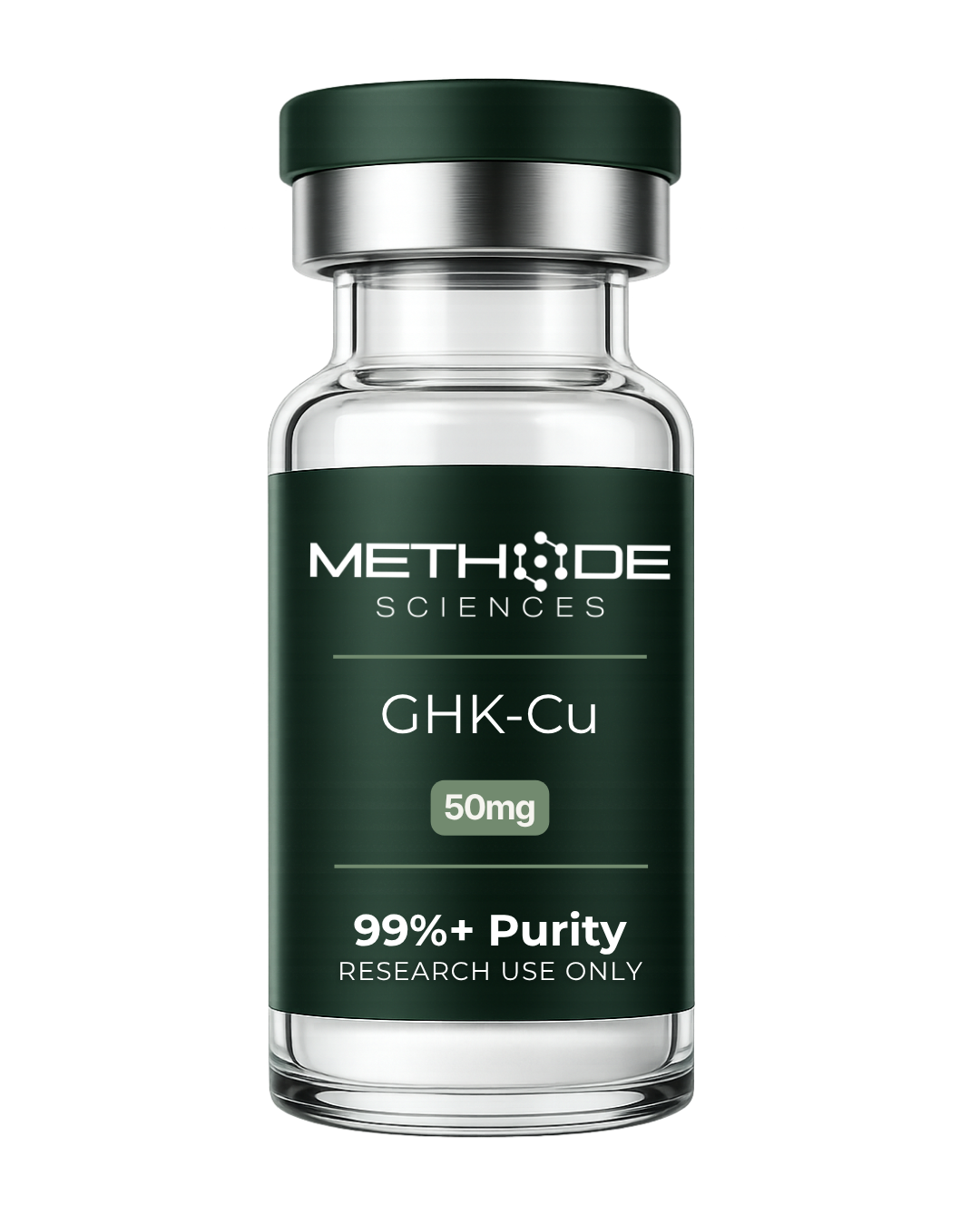
Description
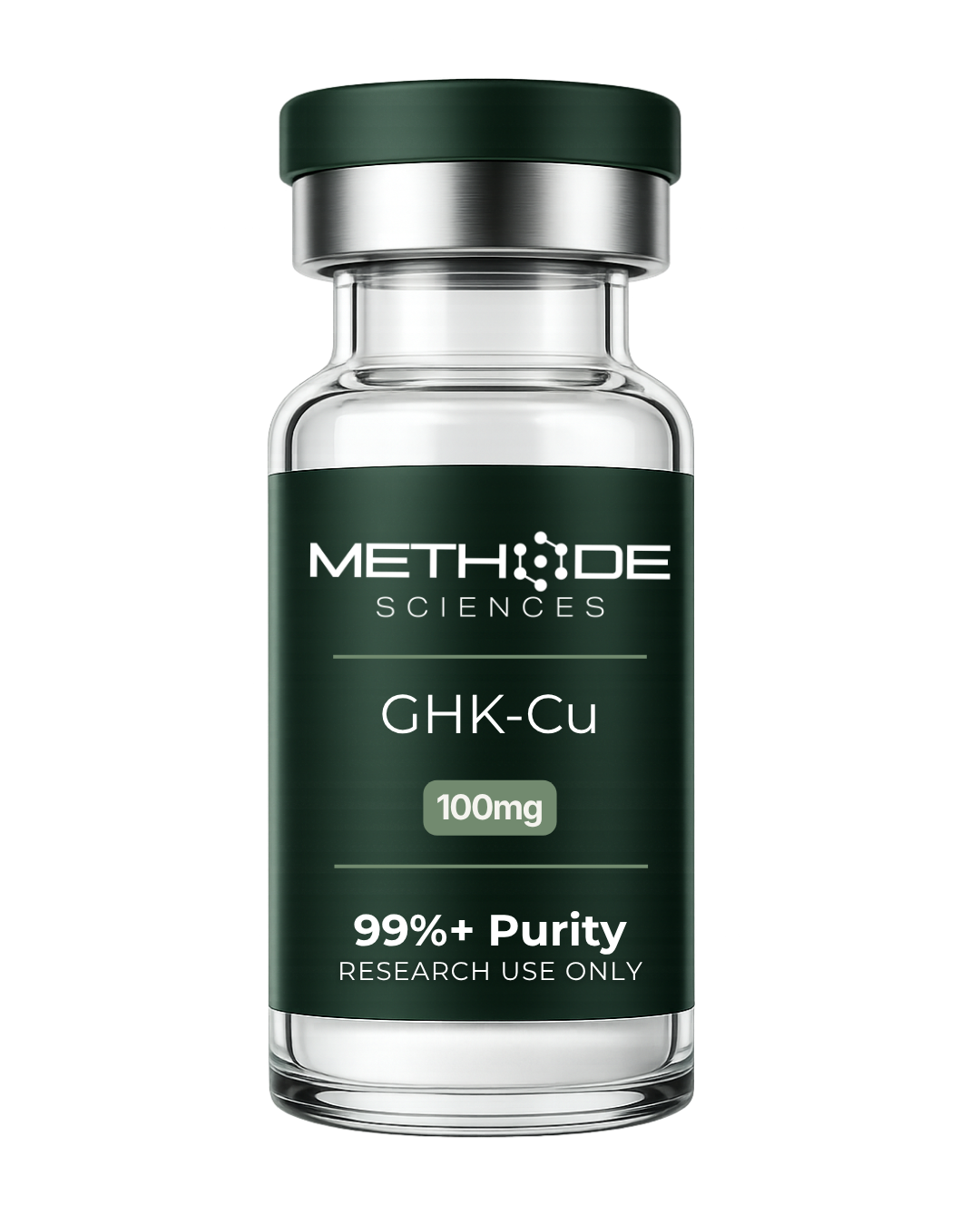
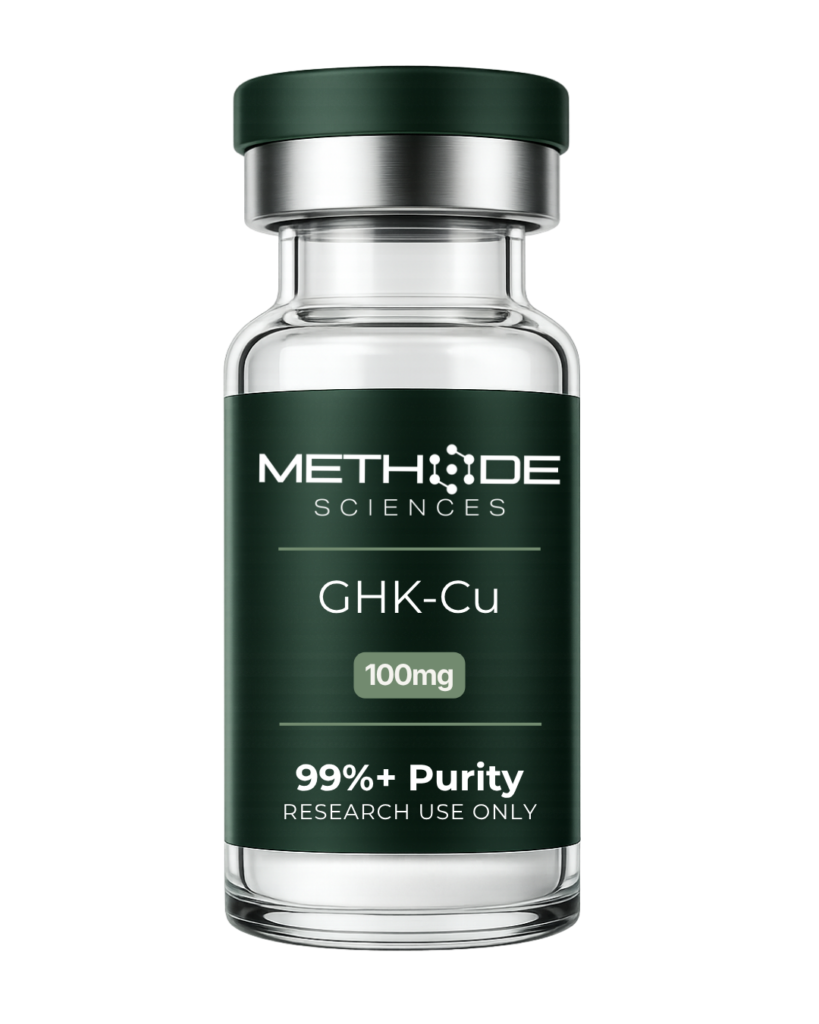
GHK-Cu
Copper complex of the naturally occurring tripeptide glycyl-L-histidyl-L-lysine. One of the most extensively characterized regenerative peptides in the literature, studied in extracellular-matrix synthesis, wound healing, hair-follicle biology, and genome-wide gene modulation. Distinctive blue lyophilized powder. 99%+ purity confirmed by independent HPLC-MS.
- Janoshik Analytical tested
- COA published before shipping
- 2–3 day US delivery, free over $199
- In stock — ships within 24 hours
✔ Third-party lab tested
Certificate of Analysis
Independent laboratory testing confirms purity and composition of this research material.
What GHK-Cu is
GHK is a tripeptide first isolated from human plasma by Loren Pickart in 1973, where it circulates at concentrations that decline sharply with age. It binds copper(II) with high affinity to form GHK-Cu, and it is this complex that carries most of the biological activity described in the literature. The peptide is released from extracellular-matrix proteins at sites of injury, which is consistent with its role as a signal for tissue remodeling.
Specifications
| Sizes | 50 mg, 100 mg lyophilized powder, 3 mL clear glass vial |
|---|---|
| Purity | ≥ 99% by HPLC; identity confirmed by LC-MS |
| Sequence | Gly-His-Lys · Cu(II) complex |
| Molecular formula | C₁₄H₂₂N₆O₄Cu (complex) |
| Molecular weight | 401.9 Da (complex); 340.4 Da (free GHK) |
| CAS | 89030-95-5 (GHK-Cu); 49557-75-7 (GHK) |
| Appearance | Blue to blue-violet lyophilized powder — the color is the copper complex and is expected |
| Solubility | Water |
| Storage | −20 °C long term; 2–8 °C short term, protected from light |
| Testing | Lot-specific COA from Janoshik Analytical |
Research areas
Extracellular-matrix synthesis
GHK-Cu stimulates fibroblast production of collagen, elastin, glycosaminoglycans, and decorin, and modulates matrix-metalloproteinase and TIMP balance — the core of its use in skin and connective-tissue models.
Wound healing and angiogenesis
The complex recruits immune and endothelial cells to injury sites and promotes new-vessel formation in dermal, bone, and gastric-ulcer models.
Hair-follicle biology
GHK-Cu enlarges follicles and prolongs the anagen phase in ex-vivo and animal models, and copper-peptide chemistry is studied in the context of follicular signaling.
Gene-expression modulation
Analysis against the Broad Institute’s Connectivity Map database indicated GHK alters the expression of roughly a third of human genes, reversing patterns associated with fibrosis, inflammation, and certain cancer signatures. This has made it a tool for systems-level studies of aging and tissue repair.
Antioxidant and anti-inflammatory signaling
The complex suppresses TGF-β and TNF-α driven inflammatory pathways and quenches reactive oxygen species, with work in lung-injury and neuroinflammation models.
Mechanism
GHK-Cu delivers copper to cells in a non-toxic, bioavailable form while independently acting as a signaling molecule. It up-regulates genes involved in DNA repair, proteasome and antioxidant function, and matrix synthesis, and down-regulates pro-inflammatory and fibrotic genes. Copper itself is a cofactor for lysyl oxidase (collagen cross-linking) and superoxide dismutase, which contributes to the complex’s matrix and antioxidant effects.
Published background
The foundational reviews are Pickart & Margolina (2018, International Journal of Molecular Sciences) and Pickart, Vasquez-Soltero & Margolina (2015, BioMed Research International). Mechanistic gene-expression work is in Hong et al. (2012, Genome Medicine), and the wound-healing literature spans several decades of animal and ex-vivo human-skin studies.
Product FAQ
Copper(II) bound to the peptide gives the complex its characteristic blue-violet color. A vial that is not blue should be reported to us before use.
GHK is the free tripeptide; GHK-Cu is the copper complex. Nearly all published activity relates to the copper-bound form, which is what this product is.
Choose based on total protocol requirement. Ordering enough of one lot up front keeps the lot number constant across an experiment.
Lot documentation
Every lot is analyzed by KOVERA LABS, an independent accredited laboratory, before listing. Testing covers identity (LC-MS), purity (HPLC), net content, and endotoxin (LAL assay, USP <85>). The COA is published to the Lab Results page before the lot goes on sale.
Storage & stability
Sealed lyophilized vials remain stable up to 24 months at −20 °C. Refrigerate at 2–8 °C on arrival and for short-term holding, protected from light and moisture. Avoid repeated freeze–thaw cycles.
Shipping & policies
Orders paid before 12 PM PST dispatch within 24 hours. Most arrive in 2–3 business days. Free shipping over $199; $14.99 flat below. US and Puerto Rico only. All sales final; damaged or incorrect orders replaced within 7 days with photos.
Support
US-based support 7 days a week at info@methodesciences.com for orders, tracking, COAs, and institutional purchasing. Support covers orders and documentation only — protocol design is the researcher’s responsibility.
Reviews
There are no reviews yet.