
Description
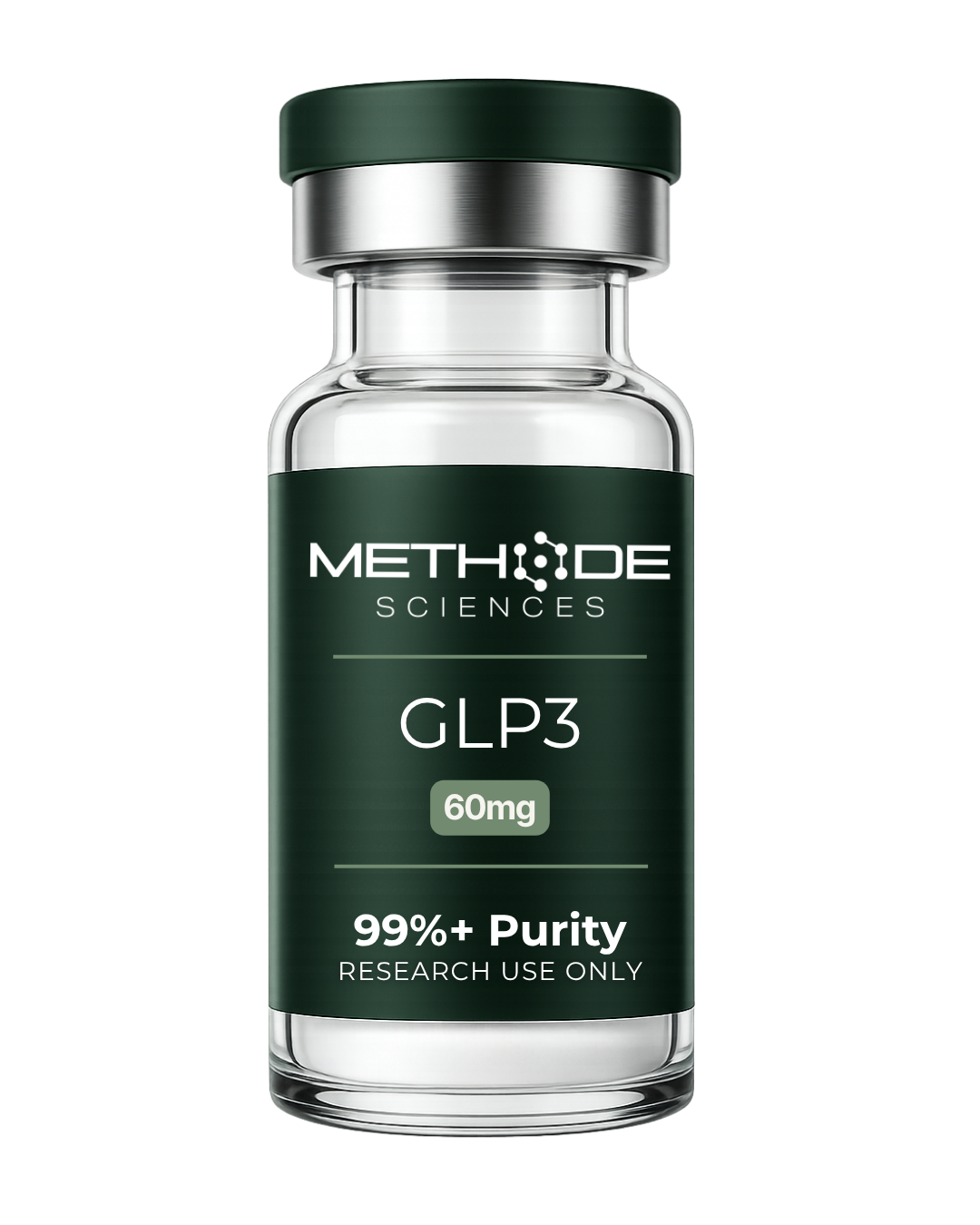
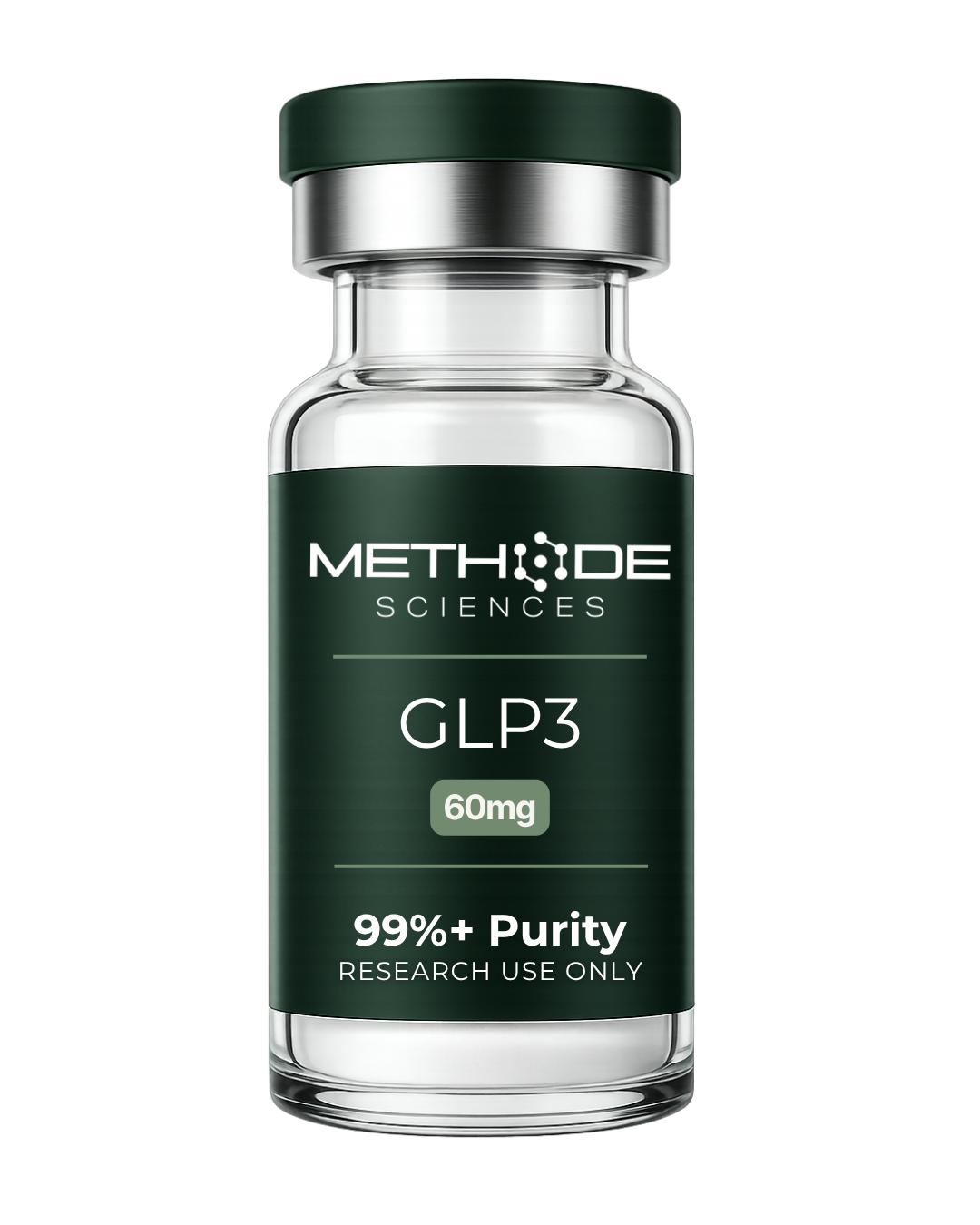
GLP3 60 mg
Triple-receptor agonist research peptide activating GLP-1, GIP, and glucagon receptors in a single 39-residue molecule. Studied in energy-balance, hepatic-lipid, and incretin-signaling models. 99%+ purity confirmed by independent HPLC-MS; lot COA published before sale.
- Janoshik Analytical tested
- COA published before shipping
- 2–3 day US delivery, free over $199
- In stock — ships within 24 hours
Certificate of Analysis
Independent laboratory testing confirms purity and composition of this research material.
What GLP3 is
GLP3 is a synthetic 39-residue peptide engineered to activate three metabolic receptors at once: the GLP-1 receptor (GLP-1R), the GIP receptor (GIPR), and the glucagon receptor (GCGR). It represents the third generation of incretin-based compounds — after single agonists (GLP-1R only) and dual agonists (GLP-1R + GIPR) — and the glucagon-receptor component is what sets it apart. That third target is the reason laboratories studying energy expenditure and hepatic fat metabolism, rather than appetite and insulin signaling alone, have taken interest in it.
Structurally, GLP3 is built on a GIP-receptor backbone with non-canonical residues (Aib at positions 2 and 20, α-methyl-leucine at 13) that resist enzymatic breakdown, plus a C20 fatty-diacid side chain that binds albumin and extends its circulating half-life to roughly a week.
Specifications
| Sizes | 60 mg lyophilized powder, 3 mL clear glass vial |
|---|---|
| Purity | ≥ 99% by HPLC; identity confirmed by LC-MS |
| Molecular formula | C₂₃₉H₃₄₃N₅₃O₇₀ |
| Molecular weight | 5,414.9 Da |
| CAS | 2381089-83-2 |
| Appearance | White lyophilized powder |
| Solubility | Water |
| Storage | −20 °C long term; 2–8 °C short term |
| Testing | Lot-specific COA from Janoshik Analytical |
Research areas
Concurrent GLP-1R and GCGR activation lets investigators separate appetite-mediated effects from direct effects on lipolysis and thermogenesis.
GCGR signaling drives hepatic fatty-acid oxidation and reduces stored liver fat, making GLP3 relevant to steatosis and steatohepatitis research.
GLP-1R and GIPR both converge on glucose-dependent insulin secretion; a compound activating both allows study of the amplified incretin response.
GLP3 provides a triple-agonist reference against which GLP-1R-only and GLP-1R/GIPR compounds can be benchmarked in binding and signaling assays.
Mechanism, receptor by receptor
-
GLP-1R — expressed in pancreatic β-cells, the CNS, and the > gut. Activation promotes glucose-dependent insulin release, > suppresses glucagon during hyperglycemia, slows gastric emptying, > and reduces appetite through central signaling.
-
GIPR — complements GLP-1R in insulin secretion and glucose > regulation, and influences lipid handling in adipose tissue. In > vitro, GLP3 shows greater potency at human GIPR than native GIP.
-
GCGR — the differentiating target. Activation raises hepatic > glucose output between meals, increases lipolysis and hepatic > fatty-acid oxidation, and lifts basal energy expenditure. Cryo-EM > work shows the peptide adopting a single continuous helix that > achieves balanced activation across all three receptors.
Published background
The compound was first characterized by Coskun et al. (2022, Cell Metabolism), who described its discovery and preclinical pharmacology. The pivotal Phase 2 study by Jastreboff et al. (2023, New England Journal of Medicine; NCT04881760) enrolled adults with obesity and reported a mean body-weight reduction of 24.2% at 48 weeks in the highest-dose group, without a plateau over the study period. Subsequent Phase 3 programs have reported improvements in HbA1c, blood pressure, triglycerides, and LDL cholesterol. These results are cited as scientific context for the compound’s pharmacology; they do not describe any use of the research material sold on this page.
How GLP3 compares
| GLP-1R agonist (e.g. semaglutide) | Dual agonist (e.g. tirzepatide) | GLP3 | |
|---|---|---|---|
| Receptor targets | GLP-1R | GLP-1R + GIPR | GLP-1R + GIPR + GCGR |
| Energy-expenditure pathway | Minimal | Moderate | Direct, via GCGR |
| Hepatic-fat research relevance | Limited | Moderate | High |
| Developmental status | Approved | Approved | Phase 3 |
Product FAQ
Dual agonists activate GLP-1R and GIPR. GLP3 adds the glucagon receptor, introducing direct effects on hepatic fat oxidation and energy expenditure that the other two receptors don’t produce on their own.
The 60 mg vial supports extended protocols from a single lot at the lowest cost per milligram in the catalog.
Research peptides may be purchased for lawful in-vitro laboratory research. They may not be used for any clinical, diagnostic, or therapeutic purpose. Methode Sciences sells only to qualified researchers and institutions who confirm they are 21 or older.
Match the lot number on your vial to the COA on the Lab Results page.
Lot documentation
Every lot is analyzed by Janoshik Analytical, an independent accredited laboratory, before listing. Testing covers identity (LC-MS), purity (HPLC), net content, and endotoxin (LAL assay, USP <85>). The COA is published to the Lab Results page before the lot goes on sale.
Storage & stability
Sealed lyophilized vials remain stable up to 24 months at −20 °C. Refrigerate at 2–8 °C on arrival and for short-term holding, protected from light and moisture. Avoid repeated freeze–thaw cycles.
Shipping & policies
Orders paid before 12 PM PST dispatch within 24 hours. Most arrive in 2–3 business days. Free shipping over $199; $14.99 flat below. US and Puerto Rico only. All sales final; damaged or incorrect orders replaced within 7 days with photos.
Support
US-based support 7 days a week at info@methodesciences.com for orders, tracking, COAs, and institutional purchasing. Support covers orders and documentation only — protocol design is the researcher's responsibility.
Reviews
There are no reviews yet.