
Description
BPC-157
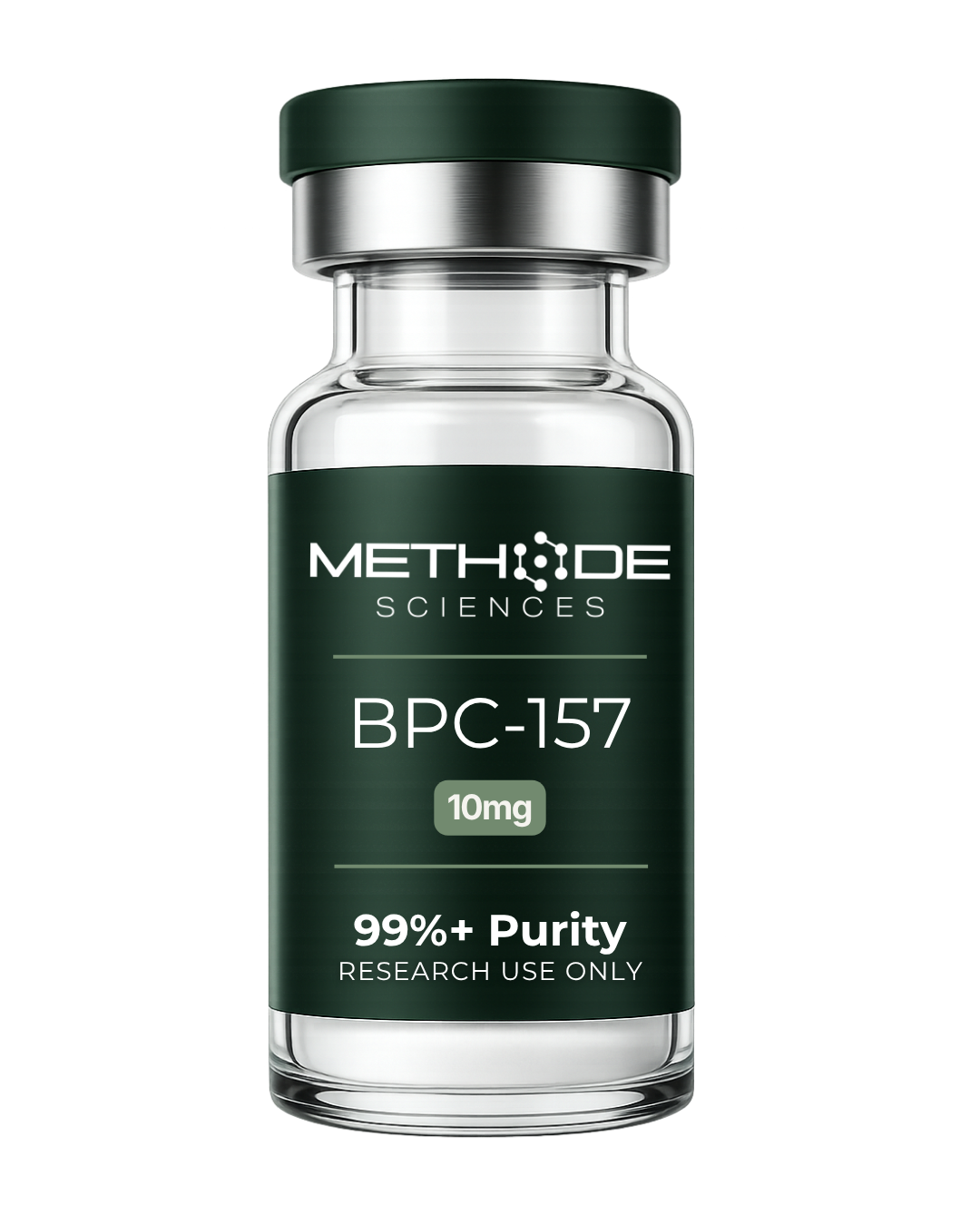
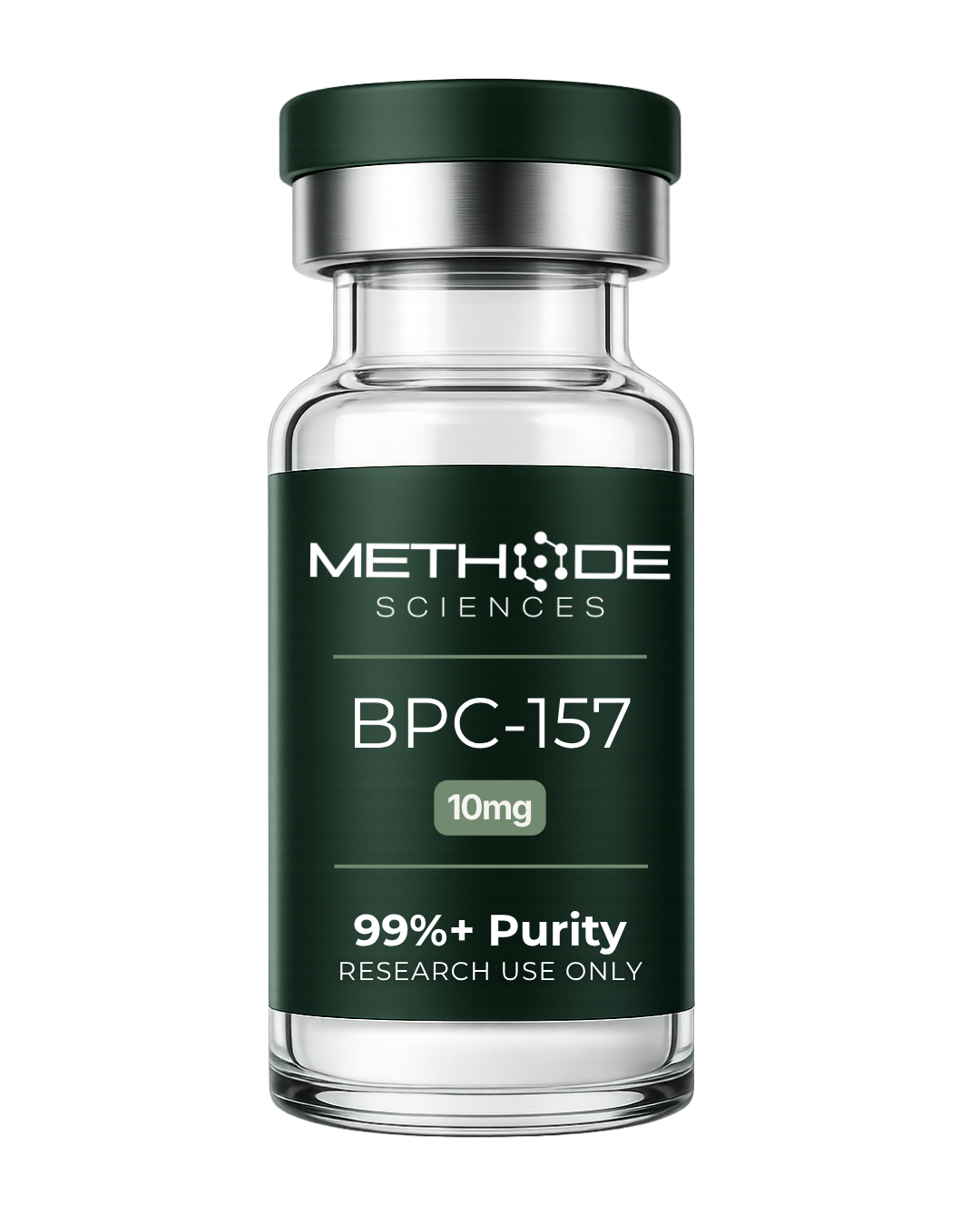
Synthetic 15-amino-acid fragment of a gastric-juice protein, studied extensively in tissue-repair, angiogenesis, and gastrointestinal-protection models. 99%+ purity confirmed by independent HPLC-MS; lot-specific COA published before sale.
- Janoshik Analytical tested
- COA published before shipping
- 2–3 day US delivery, free over $199
- In stock — ships within 24 hours
Certificate of Analysis
Independent laboratory testing confirms purity and composition of this research material.
What BPC-157 is
BPC-157 (“Body Protection Compound”) is a stable pentadecapeptide whose sequence comes from a protein found in human gastric juice. It was isolated in the early 1990s by researchers in Zagreb and has since become one of the most widely studied peptides in preclinical wound-healing and organ-protection literature. Unlike most short peptides it is stable in gastric acid, which is why so much of the animal work has examined both local and systemic effects.
Specifications
| Size | 10 mg lyophilized powder, 3 mL clear glass vial |
|---|---|
| Purity | ≥ 99% by HPLC; identity confirmed by LC-MS |
| Sequence | Gly-Glu-Pro-Pro-Pro-Gly-Lys-Pro-Ala-Asp-Asp-Ala-Gly-Leu-Val |
| Molecular formula | C₆₂H₉₈N₁₆O₂₂ |
| Molecular weight | 1,419.5 Da |
| CAS | 137525-51-0 |
| Appearance | White to off-white lyophilized powder |
| Solubility | Water |
| Storage | −20 °C long term; 2–8 °C short term |
| Testing | Lot-specific COA from Janoshik Analytical |
Research areas
The largest body of BPC-157 literature is in rodent injury models — transected Achilles tendon, medial collateral ligament, crushed muscle — where the compound has been reported to accelerate fibroblast migration and outgrowth, collagen organization, and functional recovery.
BPC-157 has been shown to up-regulate VEGFR2 expression and activate the nitric-oxide system, promoting new vessel formation in ischemic tissue and modulating vascular tone in both directions depending on the model.
Consistent with its origin, the peptide is studied in models of gastric and intestinal ulceration, NSAID-induced injury, and fistula healing, where it appears to counteract mucosal damage.
More recent work examines BPC-157 in models of traumatic brain injury, peripheral nerve damage, and dopaminergic and serotonergic signaling.
Mechanism
The peptide does not act through a single identified receptor. The best-supported mechanisms are activation of the FAK–paxillin pathway (fibroblast migration), up-regulation of growth-factor receptor expression including VEGFR2 and EGR-1, modulation of the nitric-oxide system, and interaction with the dopamine and serotonin systems. Its resistance to enzymatic degradation makes it a practical tool for in-vitro assays of these pathways.
Published background
Foundational work comes from the Sikirić laboratory (University of Zagreb), with reviews in Current Pharmaceutical Design and Current Neuropharmacology summarizing several hundred animal studies. Key mechanistic papers include Chang et al. (2011, Journal of Applied Physiology) on tendon fibroblast outgrowth and Hsieh et al. (2017, Journal of Molecular Medicine) on VEGFR2 and angiogenesis. Human clinical data remain limited to small early-phase reports.
Product FAQ
Both are studied in tissue-repair models but through different mechanisms. BPC-157 acts on growth-factor receptor expression and nitric-oxide signaling; TB-500 (thymosin β4) acts on actin dynamics and cell migration. Laboratories studying complementary pathways often work with both — see our BPC-157 / TB-500 blend.
More so than most short peptides — it survives gastric-juice conditions in vitro — but it is still supplied lyophilized for maximum shelf life. Refrigerate on arrival.
Match the lot number on your vial to the COA on the Lab Results page.
Lot documentation
Every lot is analyzed by Janoshik Analytical, an independent accredited laboratory, before listing. Testing covers identity (LC-MS), purity (HPLC), net content, and endotoxin (LAL assay, USP <85>). The COA is published to the Lab Results page before the lot goes on sale.
Storage & stability
Sealed lyophilized vials remain stable up to 24 months at −20 °C. Refrigerate at 2–8 °C on arrival and for short-term holding, protected from light and moisture. Avoid repeated freeze–thaw cycles.
Shipping & policies
Orders paid before 12 PM PST dispatch within 24 hours. Most arrive in 2–3 business days. Free shipping over $199; $14.99 flat below. US and Puerto Rico only. All sales final; damaged or incorrect orders replaced within 7 days with photos.
Support
US-based support 7 days a week at info@methodesciences.com for orders, tracking, COAs, and institutional purchasing. Support covers orders and documentation only — protocol design is the researcher's responsibility.
Reviews
There are no reviews yet.