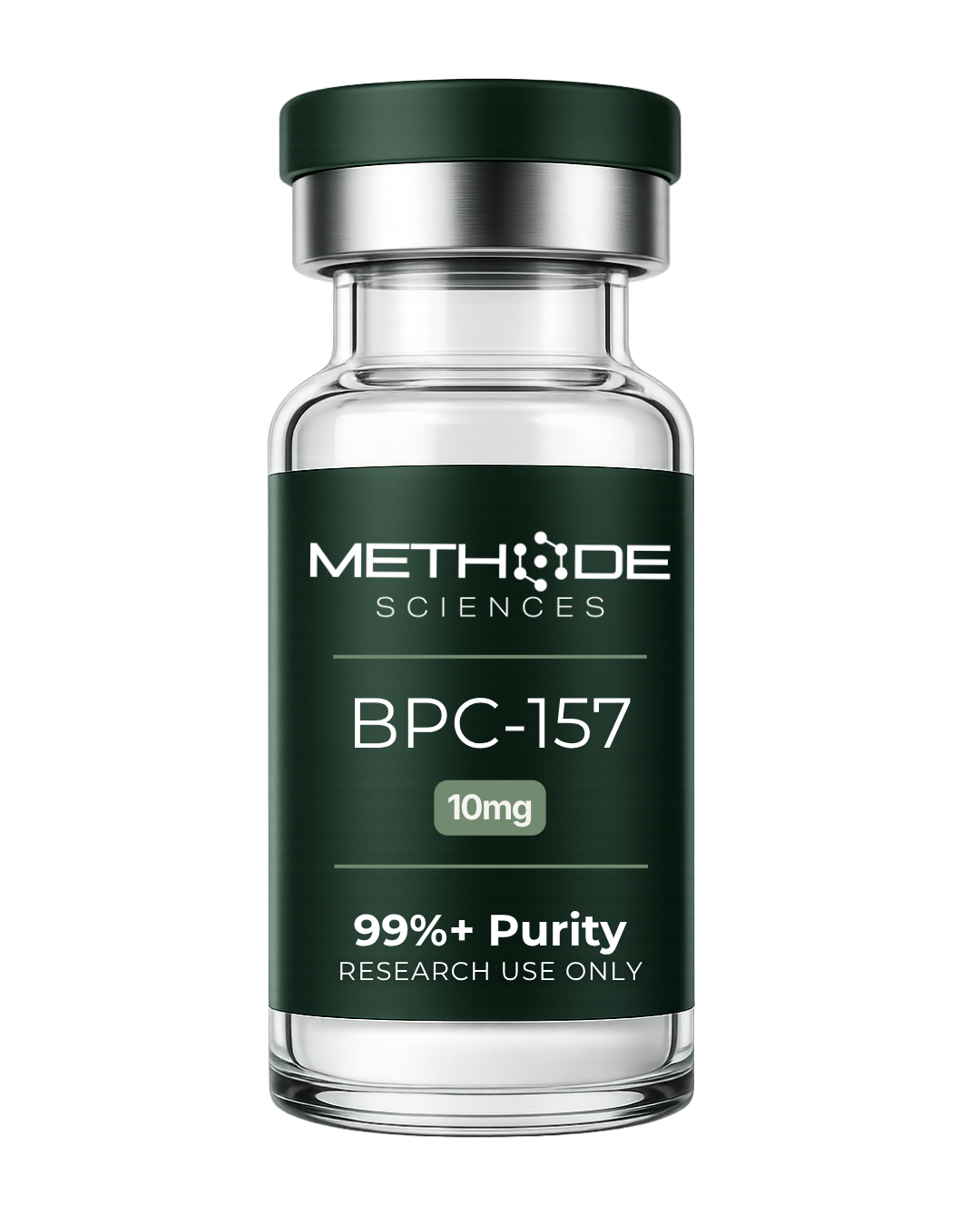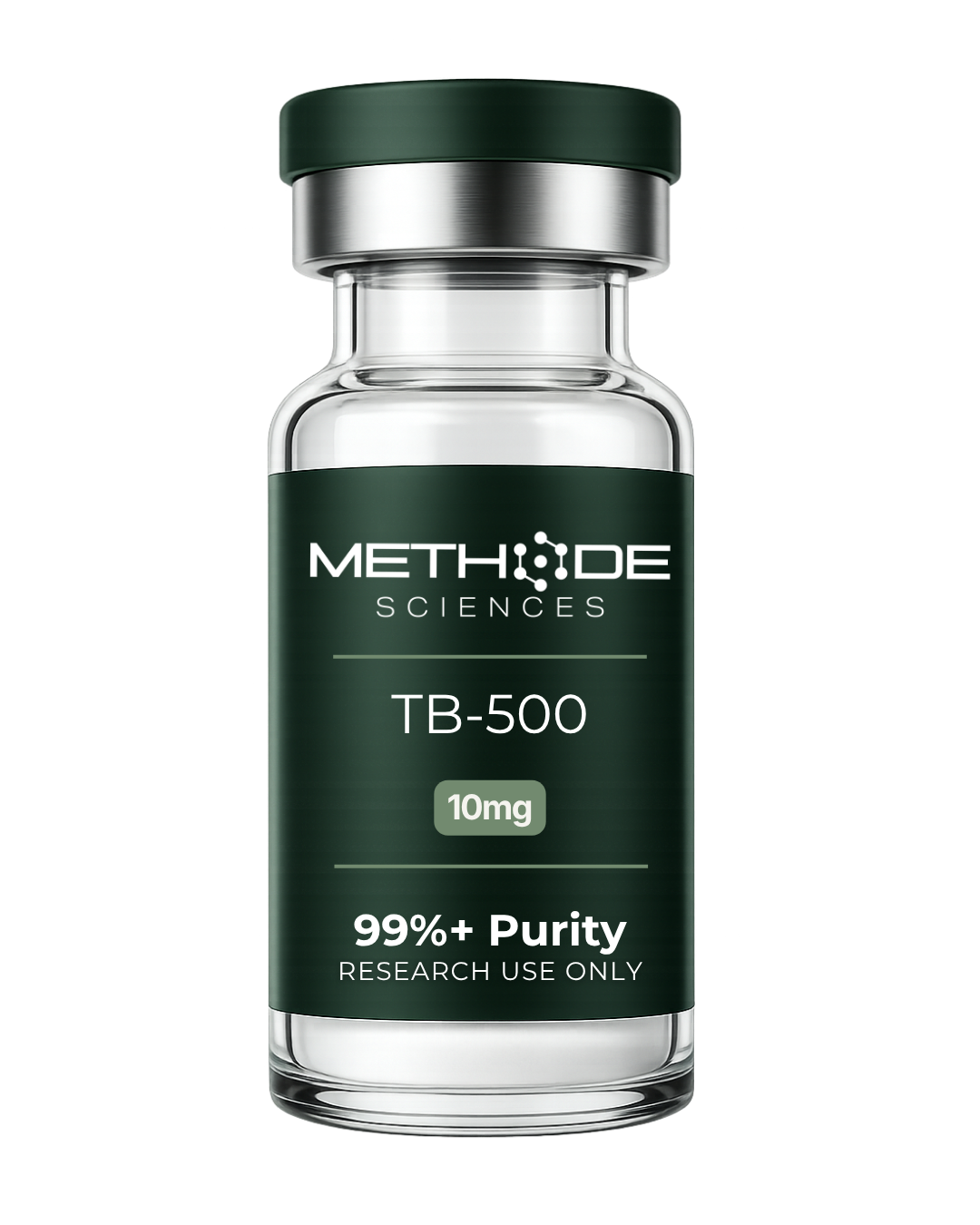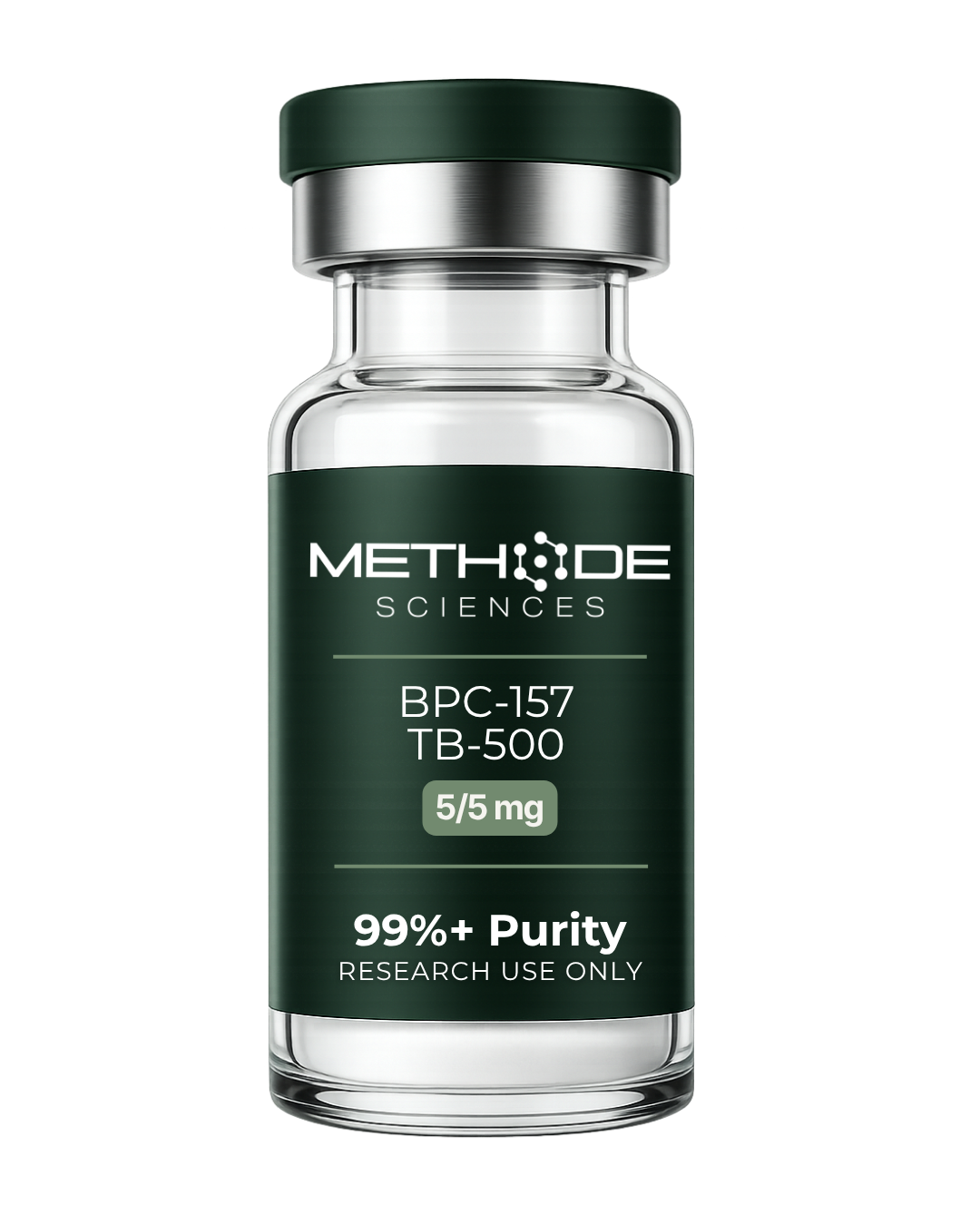
BPC-157 and thymosin β4 (TB-500) co-lyophilized in equal 5 mg quantities. The two most-studied tissue-repair peptides, acting through complementary pathways, supplied as a single verified lot. 99%+ purity for each component confirmed by independent HPLC-MS.
Independent laboratory testing confirms purity and composition of this research material.
Laboratories investigating tissue-repair pathways frequently study BPC-157 and TB-500 side by side because the two peptides engage different machinery. BPC-157 acts on growth-factor receptor expression (VEGFR2, EGR-1), the FAK–paxillin pathway, and nitric-oxide signaling; TB-500 acts on the actin cytoskeleton, ILK/Akt survival signaling, and inflammatory gene expression. This blend supplies both in one co-lyophilized vial, from a single lot, with each component separately identified and quantified on the COA — eliminating a source of variability when the two are being examined together.
| Contents | BPC-157 5 mg + Thymosin β4 (TB-500) 5 mg, co-lyophilized, 3 mL vial |
|---|---|
| Purity | ≥ 99% per component by HPLC; each identity confirmed by LC-MS |
| BPC-157 | C₆₂H₉₈N₁₆O₂₂ · 1,419.5 Da · CAS 137525-51-0 |
| TB-500 | C₂₁₂H₃₅₀N₅₆O₇₈S · 4,963.4 Da · CAS 77591-33-4 |
| Appearance | White lyophilized powder |
| Solubility | Water |
| Storage | −20 °C long term; 2–8 °C short term |
| Testing | Lot-specific COA from Janoshik Analytical, both components reported |
Tendon, ligament, and muscle injury studies where both fibroblast outgrowth (BPC-157) and cell migration into the wound bed (TB-500) are of interest.
Each peptide promotes new-vessel formation by a different route — VEGFR2 up-regulation versus endothelial migration and VEGF induction — making the pair useful for dissecting vascular-repair signaling.
TB-500’s NF-κB down-regulation and BPC-157’s mucosal-protective effects are studied in models where inflammatory resolution and scar quality are endpoints.
A single lot means a single COA, a single lot number on the label, and no ratio drift between components across an experiment. For studies that will always examine the two compounds together, the blend removes a variable; for studies that need to titrate them independently, the individual vials are the better choice.
See the individual product pages for the primary literature on BPC-157 and TB-500. No controlled studies have yet examined the two compounds in combination; the blend exists to support laboratories designing that work.
Yes. The COA reports identity and purity for BPC-157 and for thymosin β4 individually, plus net content of each.
Yes — BPC-157 5 mg and TB-500 5 mg are both available.
Match the lot number on your vial to the COA on the Lab Results page.
Every lot is analyzed by Janoshik Analytical, an independent accredited laboratory, before listing. Testing covers identity (LC-MS), purity (HPLC), net content, and endotoxin (LAL assay, USP <85>). The COA is published to the Lab Results page before the lot goes on sale.
Sealed lyophilized vials remain stable up to 24 months at −20 °C. Refrigerate at 2–8 °C on arrival and for short-term holding, protected from light and moisture. Avoid repeated freeze–thaw cycles.
Orders paid before 12 PM PST dispatch within 24 hours. Most arrive in 2–3 business days. Free shipping over $199; $14.99 flat below. US and Puerto Rico only. All sales final; damaged or incorrect orders replaced within 7 days with photos.
US-based support 7 days a week at info@methodesciences.com for orders, tracking, COAs, and institutional purchasing. Support covers orders and documentation only — protocol design is the researcher's responsibility.